Unified Autonomy: Rethinking Freight Vehicles for a Driverless Future
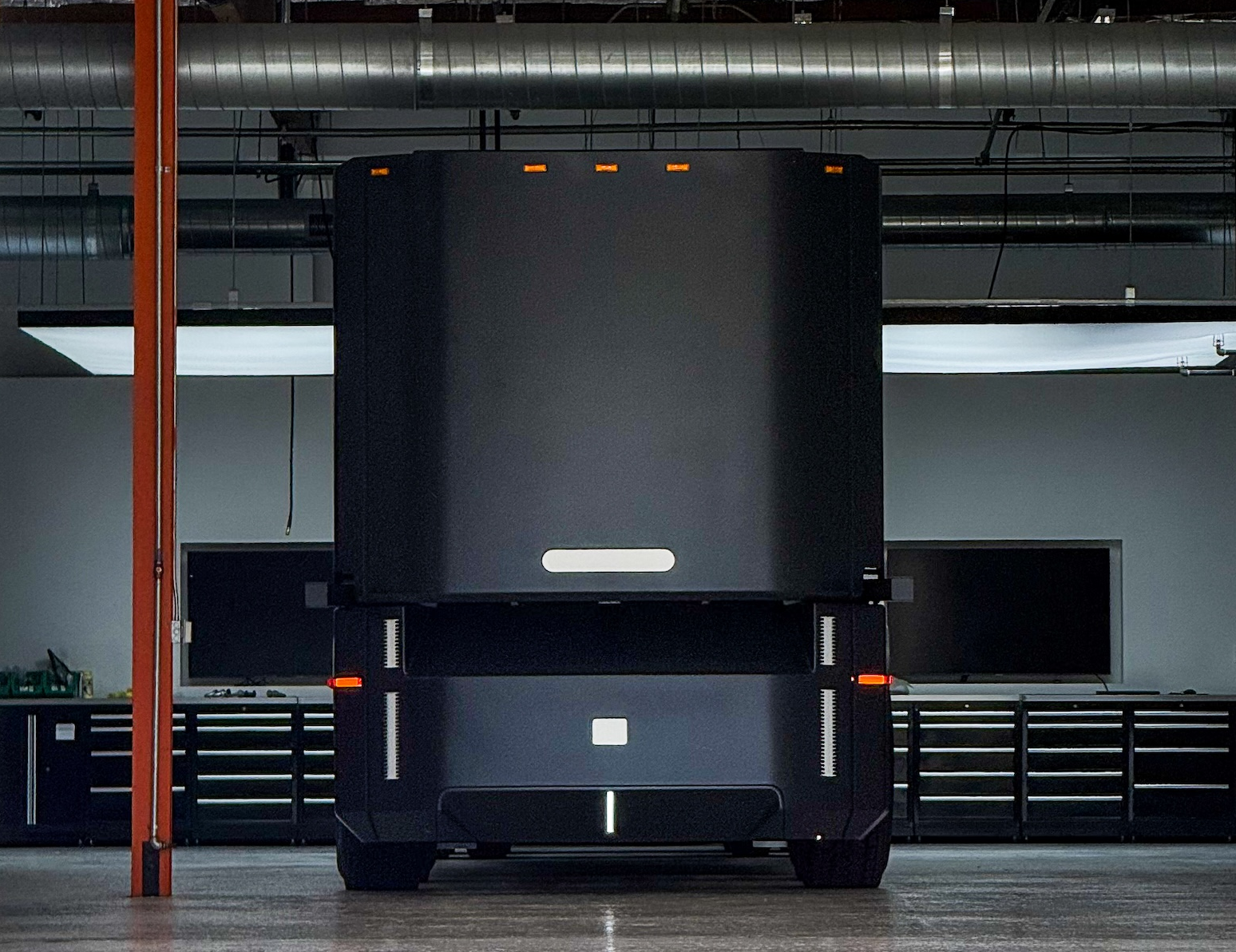
With a new round of $51 million and a fully autonomous, electric hauler already built, Humble is bringing unified autonomy to commercial freight.
A decade ago, those leading the AV industry were convinced that self-driving freight was just around the corner. Now it’s nearly 2027, and autonomous trucking still hasn’t made a significant dent in the freight market. We’re changing that with a better approach to AV: unified autonomy, where the vehicle, intelligence, and operations are designed as a single system that’s purpose-built for moving goods between ports, rail terminals, warehouses, and distribution centers.
Six months after emerging from stealth with the Humble Hauler, we’re announcing our Series A: $51 million led by Obvious Ventures with participation from insiders Eclipse, Energy Impact Partners and others. This funding will advance our efforts in autonomous freight, enabling seamless dock-to-dock transport with vehicles that adapt to the complex maneuvers each setting demands.
Our path forward is clear. Bring the same level of success and scale that robotaxis have seen to the commercial freight market, at the highest level of safety and the lowest possible cost.
Freight autonomy is here, and shippers are ready
In the infancy of AV trucking, most companies tackled long-haul routes using retrofitted vehicles. But long-haul freight requires safely putting an 80,000-pound driverless vehicle on the highway at 65 miles an hour in rain, snow, and fog. The limitations of retrofitted diesel trucks turned out to be prohibitively risky and expensive, and progress moved at a slower pace than expected.
Today things have changed. Autonomy has already arrived in the consumer sphere – Waymo, for example, has gone from 50,000 to 500,000 paid driverless rides a week in under two years. Electrification is finally bearing fruit in commercial trucking, with more than 38,000 medium- and heavy-duty electric trucks running across 386 US fleets. Regulators have given their blessing – California adopted rules for heavy-duty autonomous trucks this April, and federal lawmakers have paved the way nationally.
We’re bringing the same momentum robotaxis have seen to shippers. Starting with short-haul routes rather than long-haul highway stretches, our autonomous electric vehicles come at the perfect time – the industry needs approximately 1.2 million new drivers this decade, and the pipeline just isn't there. Here’s what customers are excited about as we put our Series A plans in motion:
- Higher payload. With no cab to carry plus a 2,000 lb federal allowance for electric trucks, the potential to haul more weight without adding cost is high.
- Significant cost savings. Combining autonomy with electrification lowers the per-mile cost, eliminating diesel price concerns entirely.
- Uncompromised safety. 360-degree sensing, with no fatigue, no distraction and no blind spot behind the trailer.
- No driver churn. Every shift is covered. No recruiting, no training, no overtime.
- 24/7 availability. Hours-of-service rules cap a driven truck at 30 to 40% utilization. The Hauler charges at the depot while it's loaded and runs around the clock.
Unified autonomy: what it is and how we’re leading it for freight
As a team of industry veterans who ushered in this first decade of AV progress and discovery, we’re taking a unified approach to autonomous freight at Humble – designing our vehicles and driverless intelligence as a single system, alongside customers, partners, and regulators that are shaping the future of the industry.
And we’re starting with short-haul: regional freight routes under 250 miles, which make up 87% of U.S. truck tonnage today. This multibillion-dollar segment represents one of the industry's biggest opportunities.
At Humble, this means:
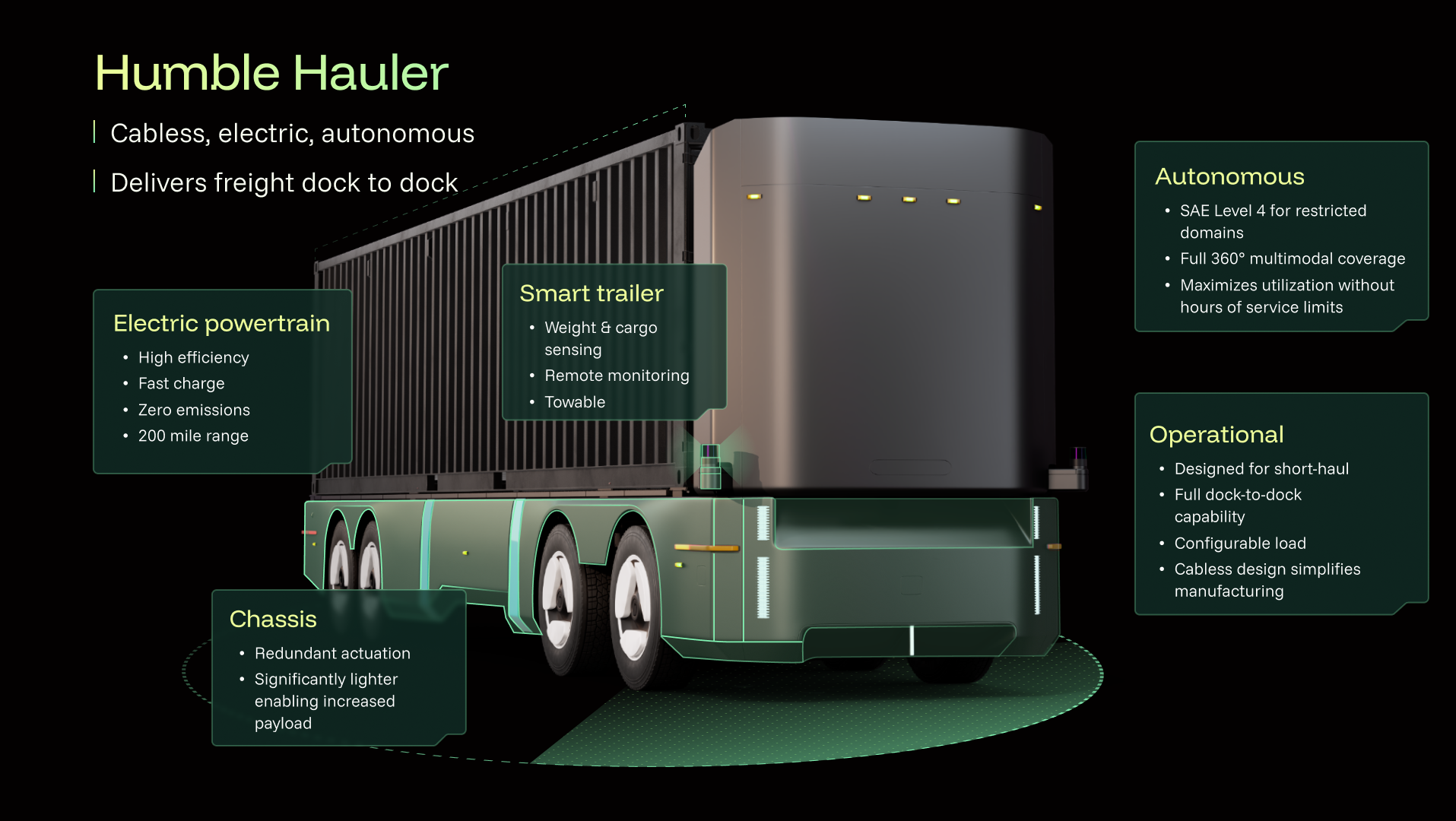
- Full stack wins. We design the vehicle and the autonomous software together, and that's why it works. From the hauler’s sensors (360° automotive cameras, LIDAR and imaging radar to de-risk night and weather), to redundant automotive-grade safety controls, to vision-first models and photorealistic simulation, it’s all part of a single system.
- Retrofits are not the way. The Humble family of vehicles is purpose-built for an autonomous future, no retrofits . Vehicles are modular and easy to adapt to a new configuration or use case.
- Zero-shot is just the start. At Humble, we use a vision-first, end-to-end foundation model alongside carefully tuned safety constraints and rules based on our customers’ sites.
- The ecosystem matters. Our vehicles use the best technology in the industry, optimized for cost efficiency and low maintenance. We partner with companies breaking ground in AI, hardware, and self-driving to avoid funding unnecessary custom programs, instead bringing AV to customer operations at a scalable cost. We plug into existing charging infrastructure wherever possible, cutting downtime and fuel expenses.
What comes next?
Our latest funding will advance customer pilots, testing and validation, early manufacturing, and expansion of our platform into a broader family of vehicles built for different regional freight needs.
We’ve spent years proving that a truck can drive itself. The harder question is how to make autonomy something a freight operator can depend on every day. The Hauler showed what a purpose-built autonomous vehicle can be. Now we’re bringing unified autonomy to commercial freight, one dock-to-dock route at a time.